EE Studio: Interactive Virtual Engineering Laboratory
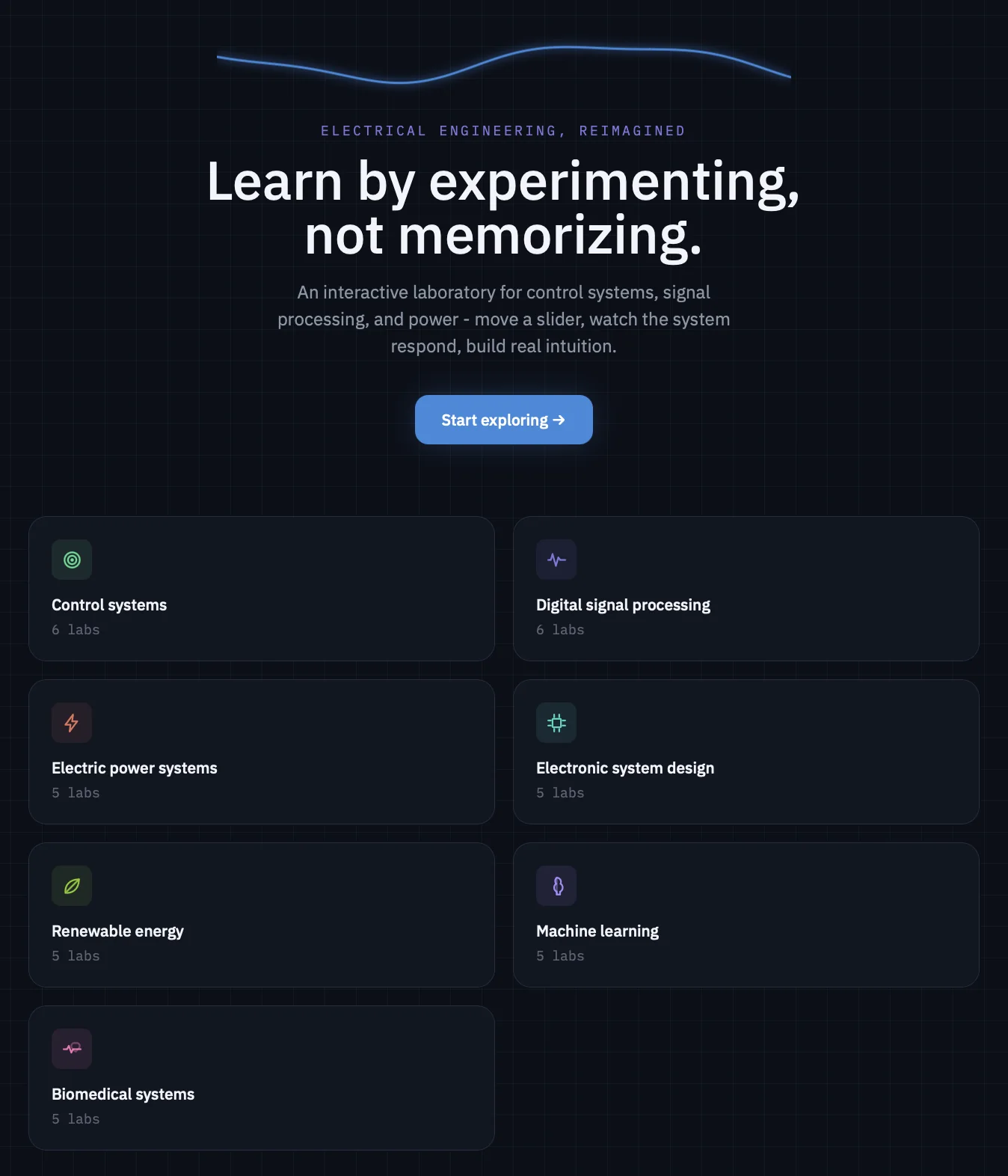
A browser-based virtual laboratory where a student changes a parameter and watches the system respond: a mass settling on a spring, a transformer's voltage sagging, a grid approaching voltage collapse.
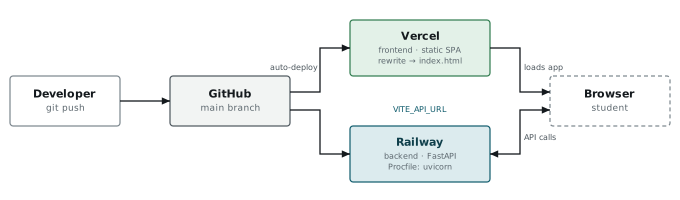
Live: frontend on Vercel, backend on Railway, source on GitHub.
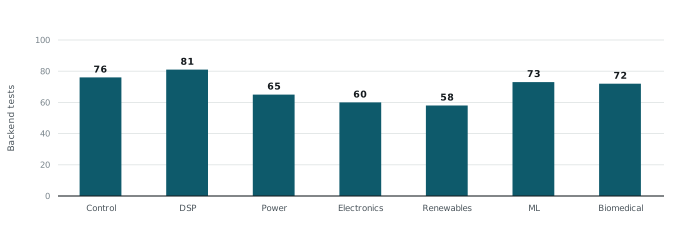
485 automated backend tests passing at the first complete milestone, checked against hand or SciPy calculations.
Human-directed, AI-assisted: I set the scope, verified each model and reviewed every lab; Claude and Claude Code generated and tested the code.
Why I built it
Electrical engineering is usually taught as equations and static plots. A student can recite that a system with a damping ratio below one oscillates without ever seeing the oscillation change. Lab equipment and professional simulators help, but both need access, licences or a learning curve.
EE Studio sits between the two: no installation, each experiment reduced to the parameters that matter, and the result shown immediately.
What it covers
| Module | Labs | Tests |
|---|---|---|
| Power Systems | Transformer, transmission line, power flow, fault analysis, protection | 65 |
| Renewable Energy | Solar PV, MPPT, wind turbine, battery storage, grid inverter | 58 |
| Control Systems | Step response, PID, Bode, root locus, Nyquist, state space | 76 |
| Signal Processing | Sampling, convolution, filters, FFT, spectrum, signal generator | 81 |
| Electronic System Design | Op-amp, rectifier, BJT biasing, RC/RL filters, regulators | 60 |
| Machine Learning | Regression, logistic regression, neural network, k-means, PCA | 73 |
| Biomedical Systems | ECG, EEG, blood pressure, pulse oximetry, pharmacokinetics | 72 |
Architecture
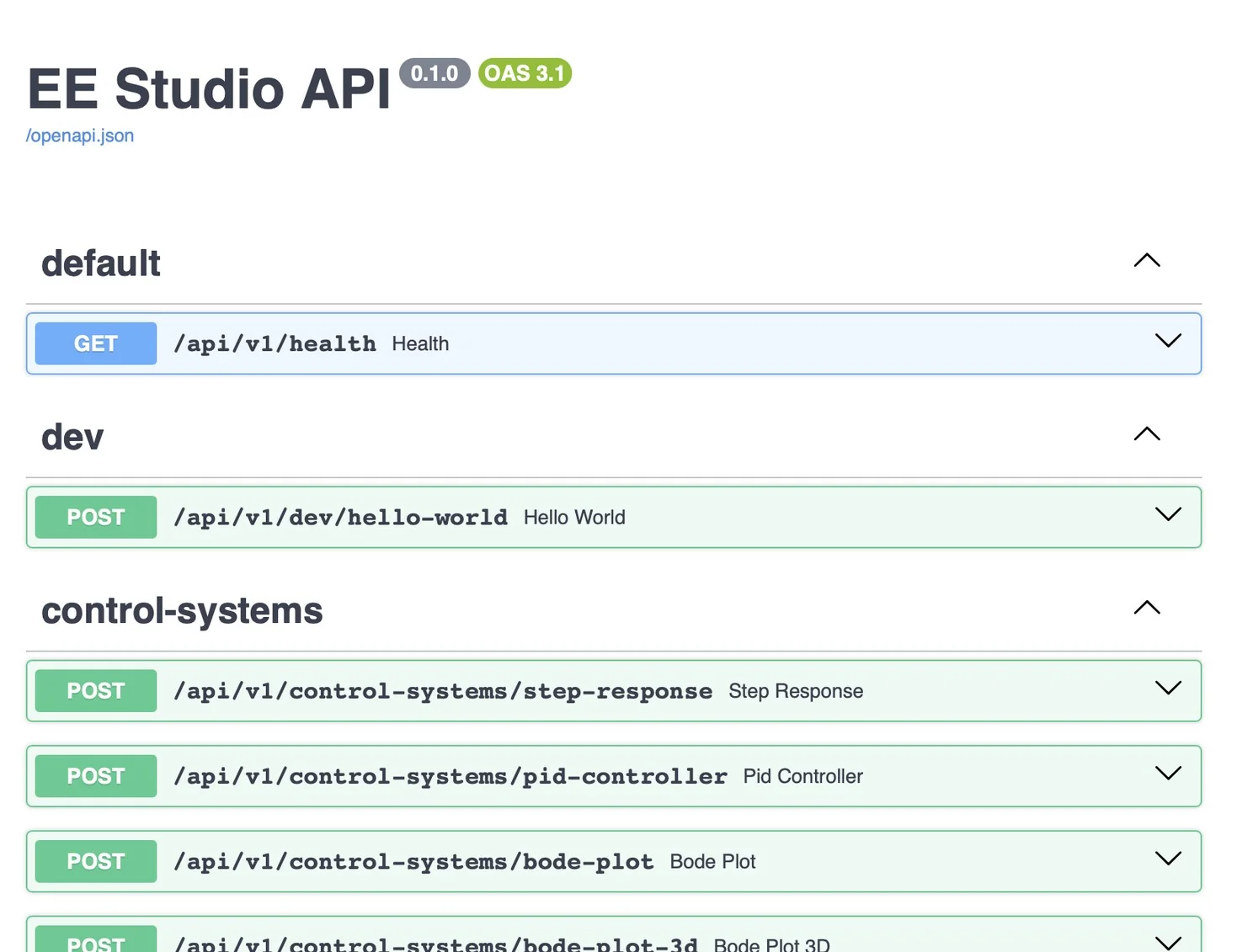
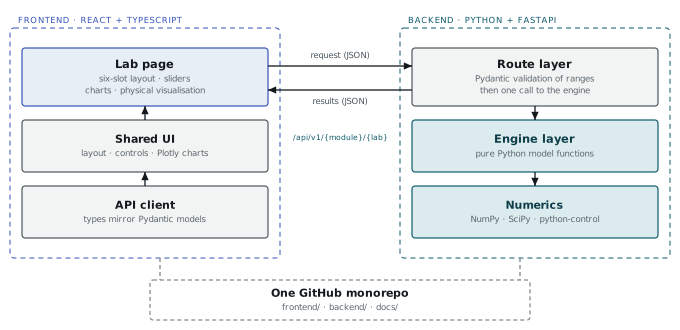
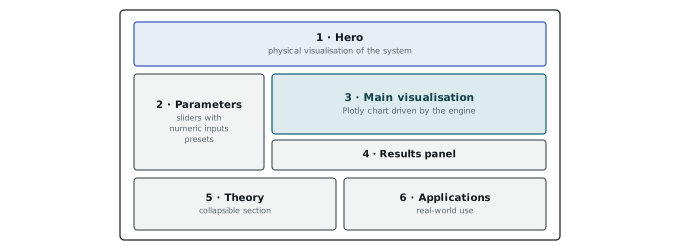
All engineering mathematics lives in pure Python functions with no web code, so each model can be tested on its own. A thin FastAPI route validates each request and calls the engine; the React lab page renders the result in charts and in a physical visualisation.
Method: verify the maths first
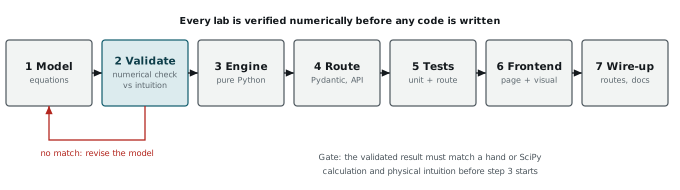
Every lab follows the same seven-step pipeline, and its first gate is mathematical: the model is checked numerically before any engine is written. Tests encode physical behaviour as well as numbers, for example that load-bus voltage falls as load rises, and that a heavy enough load makes power flow report non-convergence instead of a false value.
Lessons from bugs
The most useful lessons came from results that looked plausible but were wrong. The power-flow lab first showed voltage rising as load increased, caused by a sign error in hand-expanded equations; it was rebuilt on the admittance matrix and a regression test now checks the direction.