IoT-Based Flood Early Warning System
A low-cost IoT node that watches rainfall and water level, classifies the risk, and warns both on site and on a remote dashboard.
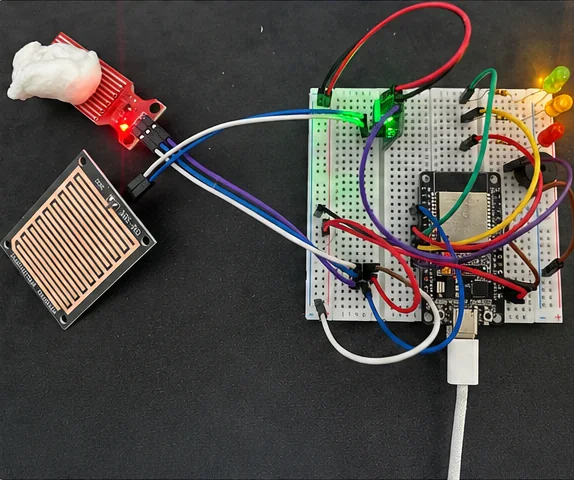
Built on a breadboard with an ESP32, rain sensor and water-level sensor; all three alert states demonstrated.
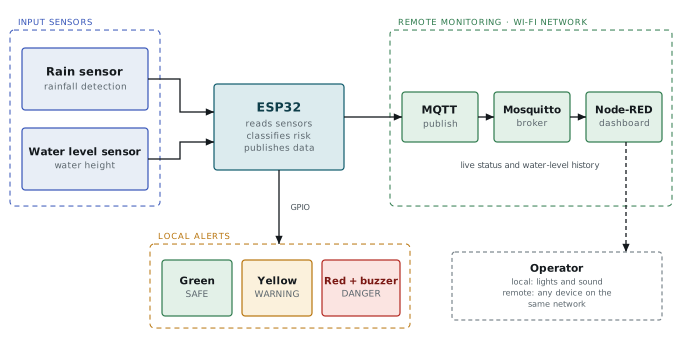
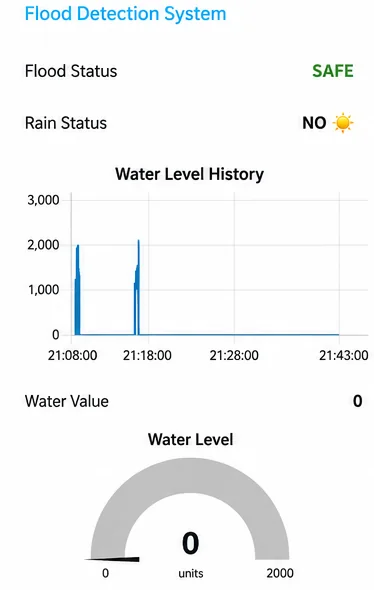
The ESP32 publishes over MQTT to a Mosquitto broker; Node-RED shows live status and water-level history on the same network.
No field deployment and no measured accuracy for the warning thresholds.
Problem
Heavy rainfall and rising water can become dangerous quickly if they are not detected early. A low-cost device that warns people nearby and reports to a remote screen can buy time for a response.
System
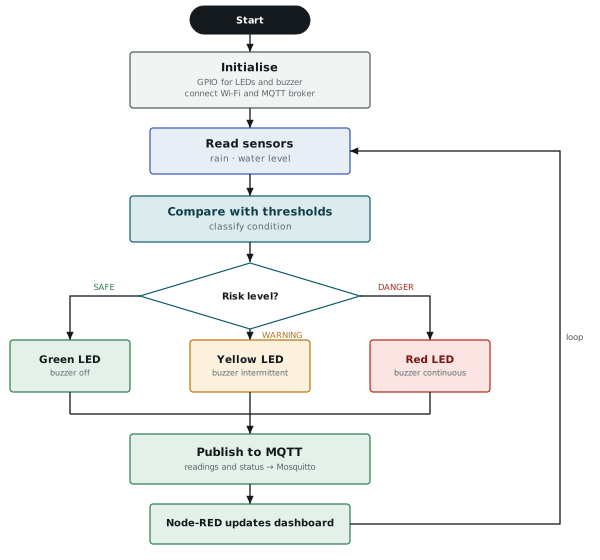
The ESP32 reads both sensors continuously and compares them with set thresholds. At the same time it publishes the readings to a Mosquitto broker, and a Node-RED dashboard subscribes to show the latest values and flood status.
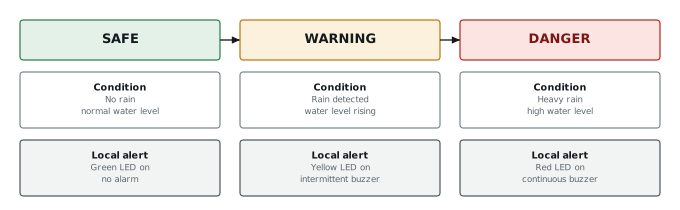
| Level | Local alert |
|---|---|
| SAFE | Green LED, no alarm |
| WARNING | Yellow LED, intermittent buzzer |
| DANGER | Red LED, continuous buzzer |
Prototype and dashboard
Results and limits
Shown
- Three-level classification with local and remote alerts working together
- Live readings and history on Node-RED
Limits and next steps
- Dashboard works only on the same local network
- Thresholds not calibrated against real flood data
- Next: cloud storage, mobile notifications, forecast integration
Resources
- PDF Project report · 8 pagesAAQ-P04_Flood-Early-Warning_Project-Report.pdf Open PDF